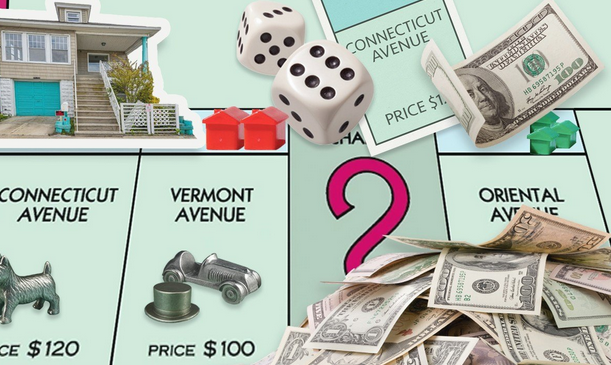
For decades, families and friends have gathered around the board game Monopoly to buy properties, collect rent, build houses, and bankrupt opponents. Most people see it as a competitive game of luck and strategy. But beneath the colorful money, tiny hotels, and famous board spaces lies something much deeper: a surprisingly accurate reflection of how real estate markets work in the real world.
The game may seem simple, yet it captures many of the same forces that shape housing markets, property investment, wealth inequality, and economic power across cities and nations. In many ways, Monopoly acts like a miniature economic simulator. It demonstrates how property ownership creates wealth, how location drives value, how scarcity increases prices, and how a small advantage can grow into total market dominance.
Ironically, the original version of the game was not created to celebrate capitalism. It was designed to criticize monopolies and expose the dangers of unchecked property ownership. The game evolved over time into a symbol of aggressive competition and wealth accumulation.
Today, the lessons inside Monopoly are more relevant than ever. Housing affordability crises, rising rents, investor-owned homes, and widening wealth gaps all mirror patterns visible on the game board. By examining Monopoly closely, we can uncover important truths about how real estate systems operate in the real world.
The Hidden Meaning Behind Monopoly
The origins of Monopoly reveal an important truth about real estate economics. The game began as “The Landlord’s Game,” created by Lizzie Magie in the early 1900s. Her purpose was to demonstrate how land monopolies enrich property owners while making life harder for renters and ordinary citizens.
Magie believed that concentrating land ownership in the hands of a few people created inequality. She wanted players to experience the frustration of paying rent to wealthy landlords while watching opportunities disappear.
Over time, the game transformed into the modern version of Monopoly, where the main objective became dominating the board and bankrupting competitors. Ironically, the warning about monopolies became a celebration of them.
This transformation itself mirrors real estate markets. Systems originally intended to support broad prosperity often evolve into systems that reward concentration of wealth and ownership.
The game unintentionally reveals a harsh economic reality: once property ownership becomes concentrated, it becomes increasingly difficult for newcomers to compete.
Property Ownership Creates Power
One of the clearest lessons from Monopoly is that ownership matters more than labor.
Players do not win because they work harder. They win because they own assets that generate income automatically. Once someone controls valuable properties, money flows toward them every time another player lands on their spaces.
This is remarkably similar to real-world real estate investing.
In real economies, homeowners and landlords build wealth not only through work but through asset appreciation and rental income. A person who owns several apartments in a growing city may earn more from property value increases than from their salary.
Meanwhile, renters continually transfer wealth to property owners through monthly payments without building ownership themselves.
Monopoly demonstrates this process perfectly. Once a player gains enough properties, especially complete color sets, they create a cycle where wealth generates more wealth.
This concept is often called “compound advantage.” In real estate markets, early ownership frequently leads to long-term financial dominance.
Location Is Everything
One of Monopoly’s most realistic features is the importance of location.
Not all properties are equally valuable. Some spaces attract far more traffic than others. Experienced players know that orange and red properties are often landed on more frequently than dark blue spaces like Boardwalk and Park Place.
This reflects one of the oldest truths in real estate: location drives value.
In real cities, properties near transportation, business districts, schools, parks, or commercial centers tend to become more valuable. A small apartment in a desirable urban neighborhood may cost far more than a larger house in a less connected area.
Location influences:
- Rental demand
- Property appreciation
- Business opportunities
- Population growth
- Infrastructure access
- Long-term investment returns
Monopoly simplifies this concept but still teaches it effectively. The best properties are not necessarily the most expensive. The most profitable locations are often the ones with the best balance between accessibility, traffic, and development potential.
This lesson explains why investors aggressively target high-demand urban zones in real life.
Scarcity Drives Prices Higher
Another important secret revealed by Monopoly is the power of scarcity.
There are limited properties on the board. Once players begin buying them, fewer opportunities remain for everyone else. As the game progresses, competition intensifies because available assets become scarce.
The same principle operates in real-world housing markets.
When supply cannot keep up with demand, prices rise rapidly. This is especially visible in major cities where population growth outpaces new housing construction.
Scarcity can emerge from several factors:
- Limited land availability
- Zoning restrictions
- Slow construction
- Population growth
- Investor speculation
- Short-term rental conversions
Monopoly also includes another subtle scarcity mechanic: limited houses and hotels. The game contains a fixed number of building pieces. Skilled players sometimes buy houses strategically to prevent opponents from upgrading properties.
This mirrors real estate development bottlenecks in real life. Construction materials, labor shortages, permits, and financing limitations can all restrict housing supply and increase prices.
Scarcity creates leverage for property owners while increasing pressure on buyers and renters.
Wealth Inequality Accelerates Quickly
One of the most fascinating aspects of Monopoly is how quickly inequality emerges.
At the start, every player has equal money and equal opportunity. But within a relatively short time, one or two players usually begin pulling ahead. Once they gain an advantage, the gap often grows rapidly.
This reflects real-world economic systems.
Research consistently shows that wealth tends to accumulate faster for people who already possess assets. Property ownership especially accelerates inequality because real estate appreciates over time while generating passive income.
In Monopoly, struggling players spend most of the game trying to survive financially. Wealthy players focus on expansion and investment.
This mirrors the real economy:
- Lower-income households often spend most income on necessities and rent.
- Wealthier households invest in appreciating assets.
- Asset ownership creates financial stability and future leverage.
The game demonstrates how difficult it becomes to reverse inequality once ownership concentration begins.
The Rich Get Richer
Monopoly illustrates a powerful economic cycle: success creates more success.
A player who gains a few profitable properties earns additional rent. That rent allows them to buy more properties and build more houses. More development increases rent income further.
This snowball effect resembles real-world property investment.
Real estate investors often use existing assets to finance additional purchases. Rising property values provide collateral for loans, enabling portfolio expansion.
For example:
- An investor buys one apartment.
- The property gains value.
- The investor borrows against that equity.
- They purchase additional properties.
- Rental income expands further.
This cycle can continue for decades.
Meanwhile, people without property ownership face increasing barriers because prices continue rising faster than wages.
Monopoly exposes how financial systems naturally favor those who already control assets.
Rent Is a Wealth Transfer Mechanism
Every time a player lands on another player’s property in Monopoly, wealth transfers from one person to another.
That process is central to both the game and the real housing market.
Rent payments are not merely housing costs. They are a mechanism through which wealth moves from tenants to landlords.
In healthy housing systems, rent provides housing while allowing property owners to maintain buildings and earn reasonable returns. But when housing shortages and speculation intensify, rents can become a major driver of inequality.
Monopoly exaggerates this process for dramatic effect. Rent becomes increasingly punishing as houses and hotels appear.
Real-world housing markets can create similar pressures when:
- Demand exceeds supply
- Corporate ownership expands
- Local wages stagnate
- Housing construction slows
- Investment speculation increases
The game demonstrates how rising rents gradually weaken financial mobility for non-owners.
Small Early Advantages Matter
In Monopoly, early luck can dramatically shape the outcome.
A player who acquires a strong property group early gains a major strategic advantage. Another player who lands in jail at the wrong moment or misses a purchase opportunity may struggle for the rest of the game.
Real estate markets often operate similarly.
Timing matters enormously in housing.
People who purchased homes before major price increases benefited from appreciation. Those entering markets after prices surged face higher barriers and larger debts.
For example, someone who bought a home in a growing city twenty years ago may now possess substantial equity. Younger generations entering the same market today often encounter dramatically higher prices.
Monopoly demonstrates how economic systems can amplify initial advantages over time.
Real Estate Rewards Patience
Although Monopoly contains luck, successful players also understand long-term strategy.
Winning usually requires patience:
- Holding valuable property
- Waiting for development opportunities
- Managing cash flow
- Investing steadily
- Avoiding panic decisions
Real-world real estate investment often rewards similar behavior.
Property markets fluctuate over time, but long-term ownership has historically generated wealth in many regions. Investors who hold properties through economic cycles often benefit from appreciation and rental income.
The game teaches that immediate gains are not always the most important factor. Sustainable growth frequently comes from controlling stable assets over long periods.
Cash Flow Is More Important Than Total Wealth
Many Monopoly players lose despite owning significant assets because they run out of liquid cash.
This mirrors real-world property markets perfectly.
A person may own expensive real estate yet struggle financially if they cannot manage monthly costs, taxes, repairs, or debt payments.
Real estate investors constantly balance:
- Rental income
- Mortgage payments
- Maintenance costs
- Interest rates
- Vacancy risk
- Property taxes
Monopoly simplifies these concepts but still highlights the importance of liquidity.
A player with strong cash flow can survive downturns and seize opportunities. A player with valuable assets but little cash becomes vulnerable.
This lesson became especially relevant during housing crises when overleveraged investors faced foreclosure despite owning large portfolios.
Negotiation Shapes the Market
Monopoly is not purely about dice rolls. Negotiation plays a massive role.
Trades often determine who wins. Skilled players understand psychology, timing, leverage, and bargaining.
Real estate markets work similarly.
Property deals involve constant negotiation:
- Purchase prices
- Financing terms
- Rent agreements
- Development rights
- Commercial leases
- Partnerships
Success frequently depends on information and negotiation skills as much as raw capital.
The game also reveals how emotional decision-making affects markets. Players become attached to properties, overestimate value, or refuse rational trades due to pride or fear.
Real-world investors and homeowners often behave similarly.
Market Psychology Influences Value
One reason Monopoly feels realistic is because emotions shape the game.
Fear, greed, optimism, and panic all influence player behavior.
Real estate markets are deeply psychological as well.
Housing booms often occur because buyers believe prices will continue rising indefinitely. Investors rush into markets due to fear of missing out.
Conversely, during downturns, panic selling can push prices downward even when long-term fundamentals remain strong.
Monopoly captures this emotional cycle:
- Excitement during expansion
- Aggressive investment behavior
- Fear of bankruptcy
- Desperation during cash shortages
- Emotional reactions to losses
The game demonstrates that markets are driven by human behavior, not just mathematics.
Monopoly Reveals the Danger of Market Concentration
Perhaps the game’s most important lesson is what happens when one player controls too much.
As monopolies form, competition disappears. Smaller players lose bargaining power. The dominant player collects increasing amounts of wealth while others struggle to survive.
This reflects concerns in modern housing markets where large institutional investors and corporations increasingly purchase residential properties.
When ownership becomes highly concentrated:
- Housing affordability may decline
- Competition weakens
- Rent increases accelerate
- Local buyers face disadvantages
- Wealth gaps widen
The original creator of the game intended to warn society about these outcomes.
Monopoly effectively demonstrates how unchecked concentration can destabilize economic fairness.
Luck and System Design Both Matter
Monopoly is partly a game of chance. Dice rolls influence outcomes significantly.
But luck alone does not determine winners. The structure of the game itself rewards ownership concentration and compounding advantage.
This mirrors real-world debates about economic inequality.
Some success comes from individual decisions and effort. But system design also shapes outcomes:
- Tax policies
- Lending rules
- Housing supply restrictions
- Interest rates
- Wage growth
- Property laws
Monopoly reveals how systems can amplify advantages regardless of individual talent.
Even skilled players struggle once another player achieves overwhelming control.
Housing Markets Can Become Self-Reinforcing
As Monopoly progresses, one pattern becomes obvious: winning players become harder and harder to stop.
The same thing can happen in housing markets.
When property values rise:
- Investors buy more homes
- Prices rise further
- Buyers rush into markets
- Speculation increases
- Affordability declines
This feedback loop can create housing bubbles.
Monopoly simplifies the process, but the core principle remains accurate: market momentum often reinforces itself until external pressures interrupt the cycle.
The Game Reflects Urban Development
The houses and hotels in Monopoly symbolize real urban development.
Adding improvements increases rent dramatically. Development transforms modest properties into powerful income generators.
Cities experience similar dynamics.
Infrastructure, transportation, commercial activity, and new housing projects can rapidly increase neighborhood value.
Gentrification often follows this pattern:
- Investors identify undervalued areas.
- Development increases.
- Property values rise.
- Wealthier residents move in.
- Original residents face rising costs.
Monopoly compresses these urban transformation dynamics into a board game format.
Bankruptcy Is Part of the System
Unlike many games, Monopoly does not merely reward winners. It eliminates losers.
Bankruptcy is central to the experience.
This reflects one of capitalism’s harsher realities: financial failure carries long-lasting consequences.
In real life, foreclosure, eviction, or overwhelming debt can severely damage financial stability for years.
The game dramatizes these pressures but also highlights an important truth: systems built around aggressive competition often produce both winners and losers.
Monopoly Shows Why Housing Is Emotional
People often become emotionally invested during Monopoly games.
Arguments emerge. Frustration grows. Alliances form and collapse.
Why?
Because housing and property touch fundamental human concerns:
- Security
- Survival
- Status
- Power
- Stability
Real-world housing debates become emotional for the same reason. Housing is not just an investment asset. It is connected to identity, opportunity, and quality of life.
Monopoly unintentionally reveals how deeply property ownership influences human behavior and social relationships.
The Modern Housing Crisis Looks Familiar
Many modern housing problems resemble advanced Monopoly games.
Across the world, cities face:
- Rising home prices
- Expensive rents
- Investor speculation
- Limited housing supply
- Wealth concentration
- Reduced affordability for younger generations
In many urban markets, property ownership increasingly determines long-term financial security.
Those who own homes benefit from appreciation. Those who rent often face rising costs without accumulating equity.
Monopoly demonstrates how these dynamics can evolve naturally within systems centered around ownership concentration.
Why Monopoly Remains Relevant Today
More than a century after its creation, Monopoly still resonates because its core themes remain deeply connected to modern economic realities.
The game exposes essential truths about real estate:
- Ownership creates wealth
- Scarcity increases value
- Location determines opportunity
- Inequality compounds over time
- Market concentration creates power
- Rent transfers wealth
- Financial systems reward existing assets
Although simplified, the game offers a surprisingly accurate introduction to the psychology and mechanics of property markets.
Its enduring popularity may stem from the fact that players instinctively recognize something real inside the experience.
Monopoly feels familiar because many people already live within systems shaped by similar rules.
Conclusion
Monopoly is far more than a family board game. It is a simplified mirror of real-world real estate economics. Every purchase, rent payment, negotiation, and bankruptcy reflects larger truths about housing markets and wealth creation.
The game demonstrates how property ownership generates power, how scarcity drives prices upward, and how inequality can expand rapidly once assets become concentrated in a few hands.
Ironically, the game’s original purpose was to warn society about these very dangers. Over time, it evolved into a cultural symbol of capitalism and competition. Yet its deeper message still survives beneath the surface.