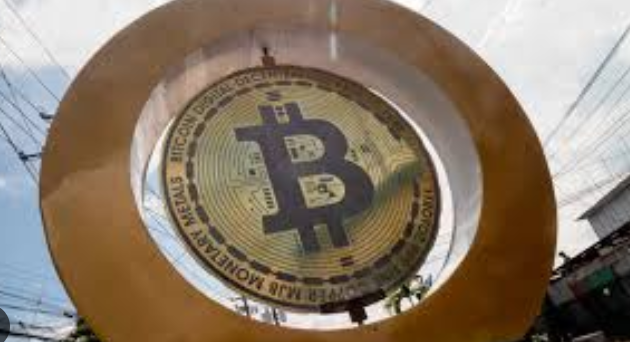
Bitcoin’s surge toward the $90,000 level has become one of the defining financial stories of the mid-2020s. While cryptocurrency markets have always been influenced by technological innovation and speculative momentum, this particular rally stands apart for a different reason: politics. Specifically, the policies and rhetoric of U.S. President Donald Trump have played a surprisingly central role in shaping market sentiment, driving institutional adoption, and accelerating the broader crypto boom.
The intersection of politics and digital finance is not new, but under Trump’s second presidency, it has taken on unprecedented significance. From regulatory easing and executive orders to bold proposals like a U.S. strategic Bitcoin reserve, government actions have directly influenced both investor confidence and capital flows into the crypto market. At the same time, Trump’s public statements—sometimes even social media posts—have demonstrated an unusual ability to move markets within minutes.
This article explores in depth how Bitcoin reached the $90,000 milestone, the policies behind the rally, the mechanisms driving the crypto boom, and the risks that still linger beneath the surface.
The Road to $90,000: Understanding the Rally
Bitcoin’s journey to $90,000 was not a straight line. It was marked by sharp rallies, sudden corrections, and intense volatility. However, several key phases stand out.
Following Trump’s election victory in 2024, Bitcoin experienced a surge of optimism. Prices climbed rapidly, with the cryptocurrency gaining roughly 30% in the immediate aftermath of the election and approaching the $90,000 mark. This early rally reflected investor expectations that a pro-crypto administration would remove regulatory barriers and legitimize digital assets.
Throughout 2025, Bitcoin continued to rise, hitting multiple all-time highs and even surpassing $120,000 at one point. The broader crypto market also expanded dramatically, with total market capitalization reaching trillions of dollars.
Yet the rally was not without setbacks. By early 2026, Bitcoin had experienced sharp declines, at one point losing nearly half its value from peak levels due to macroeconomic uncertainty and market corrections. Despite these fluctuations, the $90,000 level remained a key psychological benchmark, often acting as both resistance and support.
Notably, Bitcoin has repeatedly returned to the $90,000 range following major political developments, highlighting the strong link between policy signals and market behavior.
Trump’s Pro-Crypto Agenda: A Paradigm Shift
One of the most significant drivers of the Bitcoin rally has been the Trump administration’s explicit embrace of cryptocurrency.
Deregulation and Regulatory Clarity
Trump campaigned on a promise to make the United States the “crypto capital of the world.” Once in office, his administration moved quickly to reduce regulatory pressure on the industry. Key actions included:
- Dropping or pausing lawsuits against major crypto firms
- Relaxing enforcement by the Securities and Exchange Commission (SEC)
- Creating a more innovation-friendly regulatory environment
These steps removed what many investors had previously viewed as the biggest barrier to crypto adoption: regulatory uncertainty.
Legislative Initiatives
The administration also supported legislation aimed at integrating crypto into the financial system. Measures such as stablecoin frameworks and broader market structure laws helped legitimize digital assets and encouraged institutional participation.
Executive Orders and Policy Direction
Trump’s executive orders signaled strong government backing for crypto. These included initiatives to support digital asset markets, encourage innovation, and explore new financial infrastructure built on blockchain technology.
Together, these policies created a powerful narrative: cryptocurrency was no longer on the fringes—it was becoming part of the mainstream financial system.
The Strategic Bitcoin Reserve: A Game-Changer
Perhaps the most controversial and influential policy was the creation of a U.S. strategic Bitcoin reserve.
In March 2025, Trump signed an executive order establishing a national reserve of Bitcoin and other digital assets, primarily using cryptocurrencies seized through law enforcement actions.
Why This Matters
The concept of a Bitcoin reserve fundamentally changed how investors viewed the asset:
- Legitimization
By treating Bitcoin as a reserve asset—similar to gold—the U.S. government effectively endorsed its long-term value. - Supply Dynamics
Government-held Bitcoin reduces circulating supply, potentially increasing scarcity and supporting higher prices. - Global Signal
The move encouraged other countries to consider similar strategies, amplifying global demand.
The psychological impact alone was enormous. Investors began to see Bitcoin not just as a speculative asset, but as a strategic financial instrument.
Institutional Adoption: The Big Money Moves In
Another major factor behind the rally has been the surge in institutional investment.
ETFs and Financial Products
The approval and rapid growth of Bitcoin exchange-traded funds (ETFs) opened the door for traditional investors. Billions of dollars flowed into these products, providing a steady source of demand.
Banking Integration
Major financial institutions began integrating crypto services, including custody, trading, and blockchain-based payment systems. This trend blurred the line between traditional finance and digital assets.
Corporate Participation
Companies increasingly added Bitcoin to their balance sheets, viewing it as a hedge against inflation and currency risk.
Together, these developments created a strong demand base that helped sustain higher price levels.
Market Psychology: The “Trump Effect”
One of the most unusual aspects of the Bitcoin rally has been the direct influence of Trump’s public statements on market prices.
In several instances, Bitcoin prices surged or fell sharply following comments by the president. For example, easing geopolitical tensions or softening trade rhetoric has triggered immediate price increases, pushing Bitcoin back toward the $90,000 level.
More recently, even social media posts have caused billions of dollars in market swings within hours, highlighting the sensitivity of crypto markets to political signals.
Why Markets React So Strongly
- Crypto markets operate 24/7, amplifying real-time reactions
- Investors view policy signals as indicators of future regulation
- High leverage in crypto trading magnifies price movements
This phenomenon has led some analysts to describe Bitcoin as a “politically reactive asset” in the current environment.
The Broader Crypto Boom
Bitcoin’s rise has not occurred in isolation. The entire cryptocurrency ecosystem has benefited from the favorable policy environment.
Altcoin Growth
As Bitcoin surged, other cryptocurrencies followed. This pattern—often described as capital rotation—has historically been a hallmark of crypto bull markets.
Market Expansion
The total crypto market capitalization reached record highs, reflecting increased participation from both retail and institutional investors.
Innovation and New Projects
A more supportive regulatory environment has encouraged the development of new blockchain projects, decentralized finance (DeFi) platforms, and tokenized assets.
Risks and Volatility: The Other Side of the Boom
Despite the bullish narrative, the Bitcoin rally has not been without risks.
Extreme Volatility
Bitcoin remains highly volatile. Prices have swung dramatically within short periods, sometimes triggered by political events or macroeconomic data.
Policy Uncertainty
While current policies are supportive, future changes—either within the U.S. or globally—could reverse sentiment.
Market Corrections
The sharp decline from peak levels in early 2026 demonstrates that even strong bull markets can experience significant corrections.
Ethical and Political Concerns
Critics have raised concerns about potential conflicts of interest and the broader implications of government involvement in crypto markets.
Global Implications: A New Financial Order?
Trump’s crypto policies have implications far beyond the United States.
International Competition
Countries may compete to attract crypto businesses by adopting similar policies, potentially leading to a global race for digital asset leadership.
Monetary Policy Impact
The rise of Bitcoin as a reserve asset challenges traditional monetary systems and could influence central bank policies.
Financial Inclusion
Cryptocurrency offers new opportunities for financial inclusion, particularly in regions with limited access to traditional banking.
Future Outlook: Can Bitcoin Go Beyond $90,000?
Looking ahead, analysts remain divided on Bitcoin’s trajectory.
Bullish Case
- Continued regulatory support
- Increasing institutional adoption
- Potential expansion of the strategic reserve
- Growing integration with traditional finance
Some forecasts suggest Bitcoin could reach significantly higher levels in the coming years.
Bearish Case
- Market saturation and speculative excess
- Regulatory backlash
- Macroeconomic instability
- Overreliance on political narratives
The truth likely lies somewhere in between, with Bitcoin continuing to experience both growth and volatility.
Conclusion: Politics Meets Digital Finance
The Bitcoin $90,000 rally is more than just a market milestone—it represents a fundamental shift in the relationship between politics and finance.
Under Trump’s presidency, cryptocurrency has moved from the margins to the center of economic policy. Through deregulation, strategic initiatives, and direct engagement with the industry, the administration has played a pivotal role in shaping the current crypto boom.
However, this new dynamic also introduces new risks. Markets that are heavily influenced by political decisions can be unpredictable, and the same policies that drive growth can also trigger volatility.